In industrial piping systems, strength, reliability, and safety are non-negotiable. Carbon steel fittings are among the most widely used components in pipelines because they offer an excellent balance of durability, performance, and cost. From oil refineries and power plants to construction and manufacturing units, carbon steel fittings form the backbone of fluid and gas transportation systems. At AB Steel, we supply high-quality carbon steel fittings engineered to meet demanding industrial requirements. This blog explains what carbon steel fittings are used for, where they are applied, and why they remain a preferred choice across industries.
Understanding Carbon Steel Fittings
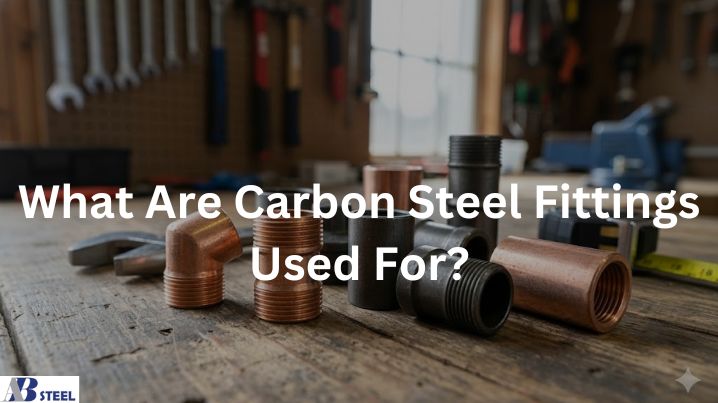
Carbon steel fittings are piping components made from steel alloys in which carbon is the primary alloying element. These fittings are used to connect, control, redirect, or terminate pipes in a piping system. Depending on the application, they can be manufactured as copper steel butt-weld fittings, threaded fittings, or forged-weld fittings. Their mechanical strength and ability to withstand pressure make them ideal for industrial environments where safety and performance are critical.
Why Carbon Steel Fittings Are Widely Used
One of the main reasons carbon steel fittings are so popular is their high strength and load-bearing capability. They can handle high pressure, high temperature, and mechanical stress without deforming or failing. Carbon steel fittings also offer excellent durability, making them suitable for long-term use in heavy-duty systems. Compared to many alloyed or stainless alternatives, carbon steel fittings provide a cost-effective solution while still meeting stringent industrial standards.
Primary Uses of Carbon Steel Fittings
Carbon steel fittings are primarily used to change the direction of flow, connect pipes of different sizes, branch pipelines, or close pipe ends. Elbows are used to redirect flow, tees allow branching, reducers help transition between pipe sizes, and caps are used to seal pipe ends. These fittings ensure that piping systems function efficiently while maintaining pressure integrity and smooth flow.
Role in High-Pressure and High-Temperature Systems
Carbon steel fittings are extensively used in systems where fluids or gases are transported under high pressure and temperature. Their excellent tensile strength allows them to withstand extreme operating conditions without cracking or leaking. This makes them a preferred choice in steam lines, boiler systems, heat exchangers, and thermal power plants, where reliability and safety are critical.
Use of Carbon Steel Fittings in Oil and Gas Industry
The oil and gas industry relies heavily on carbon steel fittings for upstream, midstream, and downstream operations. These fittings are used in pipelines that transport crude oil, natural gas, and refined products. Their ability to withstand pressure, mechanical stress, and harsh operating conditions makes them suitable for onshore and offshore applications. Carbon steel fittings are also commonly used in refineries, processing units, and storage facilities.
Applications in Construction and Infrastructure
In construction and infrastructure projects, carbon steel fittings are used in structural piping, fire protection systems, and water supply networks. Their strength and durability ensure long service life even under continuous load and usage. In industrial buildings, carbon steel fittings support large-scale piping layouts required for utilities such as water, air, and fuel distribution.
Use in Chemical and Process Industries
Carbon steel fittings are widely used in chemical plants and process industries where compatibility with a variety of fluids is required. While not suitable for highly corrosive media without protective coatings, carbon steel fittings perform well with many chemicals, oils, and non-corrosive fluids. With proper surface treatment or lining, they can be adapted for more demanding chemical environments.
Carbon Steel Fittings in Power Generation
Power plants, including thermal and combined-cycle facilities, use carbon steel fittings extensively in steam, condensate, and cooling water lines. These fittings maintain system integrity under high pressure and temperature fluctuations, ensuring consistent performance and operational safety. Their reliability reduces downtime and maintenance costs in continuous-operation environments.
Maintenance, Longevity, and Cost Benefits
Carbon steel fittings are valued for their long service life when properly installed and maintained. Regular inspection, corrosion protection, and appropriate material selection help extend their lifespan. From a cost perspective, carbon steel fittings offer a lower initial investment compared to alloy or stainless steel fittings, making them a practical choice for large-scale industrial projects.
Why Choose AB Steel for Carbon Steel Fittings
At AB Steel (absteel.in), we supply carbon steel fittings that meet international standards and are suitable for a wide range of industrial applications. Our fittings are manufactured with precise dimensions, consistent material quality, and strict quality control to ensure reliability and safety. Whether for oil and gas, power, construction, or general engineering, AB Steel provides dependable carbon steel fitting solutions.
Conclusion
Carbon steel fittings are used wherever strength, pressure resistance, and reliability are required in piping systems. Their versatility across industries such as oil and gas, power generation, construction, and manufacturing makes them an essential component of modern infrastructure. By choosing high-quality carbon steel fittings from AB Steel, industries can ensure efficient, safe, and long-lasting piping performance.