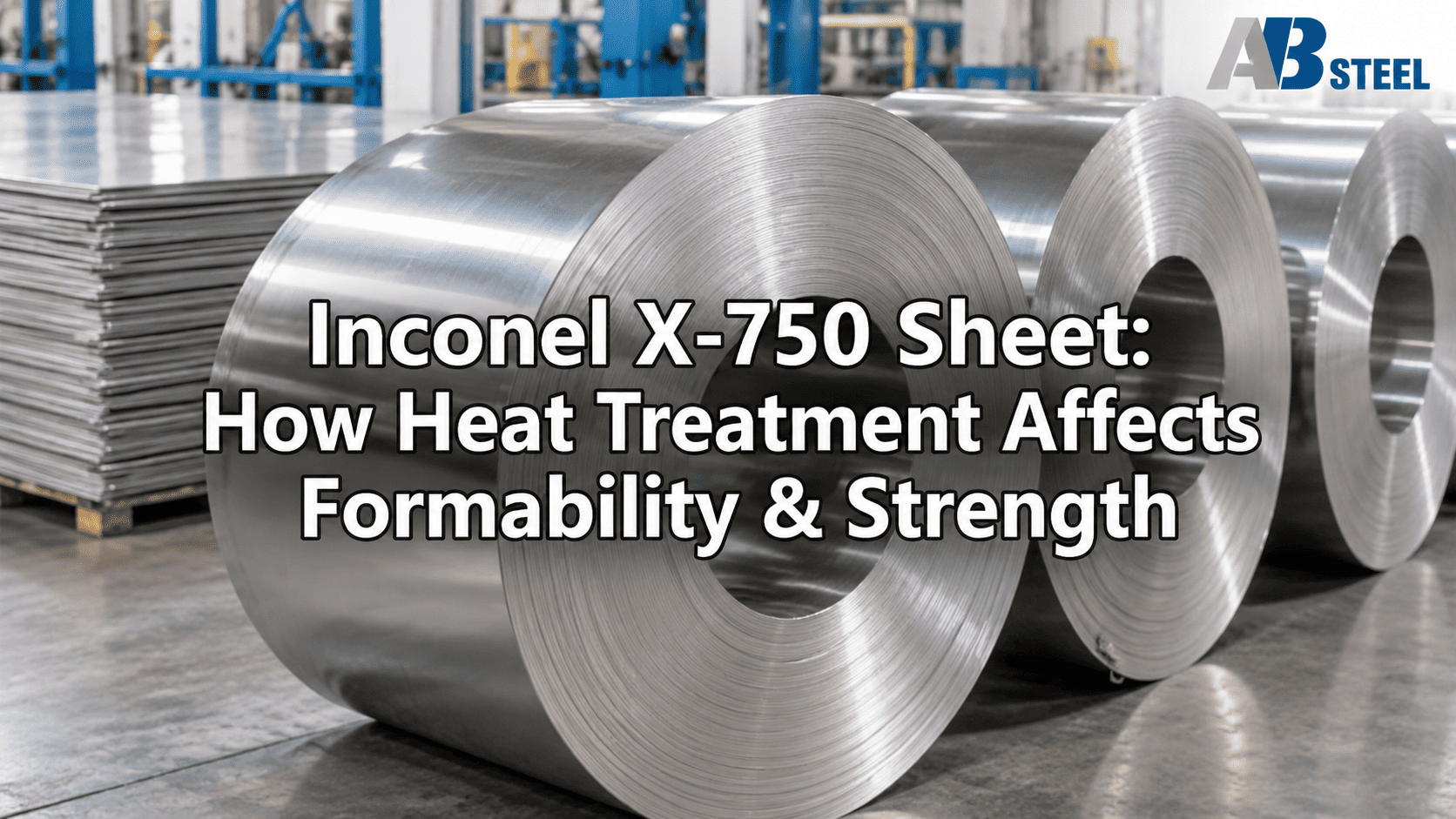
A sheet that bends cleanly can split, and the difference usually comes down to the condition the material arrived in. Inconel X-750 is a precipitation-hardenable nickel-chromium alloy, which means its mechanical properties shift depending on the thermal cycle applied to it. Fabricators who treat it like an austenitic stainless grade run into cracked radii, dimensional drift and rejected parts. Heat treatment sets the balance between strength and ductility, and that balance decides whether a forming operation succeeds or scraps the blank.
What Makes Inconel X-750 a Heat-Treatable Alloy?
Titanium and aluminium additions give this alloy its response to thermal processing. Hold the material at an elevated temperature and those elements dissolve into the nickel-chromium matrix. Cool it and then age it under controlled conditions, and fine strengthening precipitates form through the grain structure, restricting dislocation movement and raising strength. That mechanism explains why the same chemistry behaves so differently from one delivery to the next.
Two conditions dominate practical work. Solution-treated material carries the softer, more ductile structure that forming operations prefer. Precipitation-hardened material carries the strengthening precipitates and the higher mechanical properties that come with them. Mill test certificates state which condition applies, and ignoring that line creates problems downstream, because tooling, press settings and radii all depend on it. Confirm the supplied condition before planning any fabrication sequence.
How Heat Treatment Affects Formability and Strength
Strength and ductility pull against each other. Raise one through precipitation hardening and the other falls, which narrows the window available for bending, stamping, deep drawing and roll forming. Harder material resists deformation, springs back further from the tool and concentrates strain at tight radii where cracking starts. Press tonnage climbs. Tool wear climbs with it.
Age hardening before forming compounds every one of these effects, so components with tight bend radii or complex geometry grow harder to produce once the strengthening cycle has run. Actual values vary with the applicable material specification, product form and treatment condition.
Effect of Material Condition on Formability and Strength
| Material condition | Formability | Strength |
| Solution-treated condition | Generally more suitable for forming, subject to specification | Depends on the specified condition |
| Precipitation-hardened condition | May require more demanding forming processes | Increased through precipitation hardening |
What Are the Main Stages of Inconel X-750 Heat Treatment?
- Solution treatment: Establishes the required metallurgical condition in the material under the applicable procedure before any strengthening cycle begins.
- Controlled cooling: Follows the specified cooling requirements so the structure reaches the ageing stage in the intended state.
- Precipitation ageing: Develops strengthening precipitates within the matrix to improve mechanical properties to the level the specification calls for.
- Property verification: Confirms compliance with applicable material requirements through testing before the material moves into fabrication or service.
Temperatures, holding times and cooling procedures differ by specification and product form, so verify every parameter against the governing document.
Should Inconel X-750 Sheet Be Formed Before or After Heat Treatment?
Forming before age hardening suits most component designs that involve sharp bends, drawn features or multi-stage pressing. Softer material tracks the tool more closely. Once ageing raises hardness, work hardening accelerates during deformation, springback widens and the press needs more force to hit the same geometry, which often pushes a job toward heavier tooling, intermediate stress relief or tighter process controls. Some assemblies still demand the reverse order because final strength must exist before welding or machining steps. Set the sequence from the final component requirements and the material specification together.
Common Fabrication and Material Selection Mistakes
- Applying heat-treatment parameters borrowed from a different alloy or a different product form than the one being processed.
- Ignoring the supplied material condition and assuming every delivery arrives in the softer solution-treated state.
- Overlooking springback and work hardening during forming, which produces parts that miss dimensional tolerance.
- Selecting material without first checking the mechanical properties the finished component actually needs in service.
- Failing to verify material test documentation and traceability before the sheet enters production.
How to Specify Inconel X-750 Sheet for Industrial Applications
Clear specifications prevent most of the problems above. State the alloy designation along with the applicable material specification, since the specification governs chemistry limits, testing and permitted conditions. Add sheet thickness, dimensions and surface finish, because finish affects both forming behaviour and corrosion performance. Name the supplied condition and the required final condition separately, as those two rarely match. Describe the forming, machining and operating requirements the part will face, which lets the supplier flag any conflict early. Finish with material test certificate and traceability requirements. AB Steel supplies Inconel X-750 sheets, plates and coils against documented specifications across refinery, petrochemical, fertiliser and engineering projects.
Conclusion
Heat treatment governs the trade between formability and strength in every inconel x 750 sheet, and the condition stated on the certificate decides how the material behaves under a press. Solution-treated stock forms more readily. Precipitation-hardened stock delivers the mechanical properties the design calls for and resists deformation accordingly. Choose the condition deliberately, plan the fabrication sequence around the final component, and verify both against the applicable specification before production starts. Contact AB Steel to confirm available conditions and thicknesses for your inconel x 750 sheet requirement.